✦ Companion-based Gamified Running Buddy ✦ Beginner-friendly ✦ Community Co-creation
Motivation & Research
The Why · Motivation statement
We chose the "Active Lifestyles" direction because we've witnessed too many beginners being deterred from running—due to boredom, loneliness, and lack of positive feedback. Existing apps overemphasize competitive data while neglecting emotional support and habit formation for beginners.
RunBuddy creates a cartoon running companion that transforms running from a "task" to an "anticipation" through companionship mechanisms, lightweight gamification, and safe running volume recommendations. We integrate professional guidance and costume collection into the product, responding to the concept of inclusive sports. This design directly addresses real pain points: beginners need encouragement, not pressure. Based on Self-Determination Theory (SDT), RunBuddy enhances autonomy, competence, and relational connection to help users establish sustainable active lifestyles.
The Gap · Four academic papers & four commercial products (each: 3 done well · 3 missed)
📄 Run Together (Şahin & Şener, 2025) ✅ Strengths: Mixed-method research combining quantitative and qualitative data · Deeply explores social motivation mechanisms, confirming peer companionship boosts exercise adherence · Applies SDT framework to systematically analyse autonomy, competence, and relatedness in running ❌ Gaps: Covers online running only, no offline/real-world outdoor adaptation · Gamification design is superficial; lacks a complete core closed-loop system including virtual companion, in-app economic systems, and reward progression mechanics
📄 Just a Fad? Gamification (Lister et al., 2014) ✅ Strengths: Constructs a robust COM-B behaviour change model framework · Conducts in-depth narrative advocacy research, demonstrating that story-driven emotional guidance yields superior long-term retention over simple task rewards ❌ Gaps: Case studies are outdated, misaligned with modern mobile UX and contemporary app design trends · Lacks runner-specific validation; discusses general fitness gamification without targeted optimisation for endurance, outdoor conditions, or runner-specific needs
📄 Persuasive technology in the real world (Fritz et al., 2014) ✅ Strengths: Emphasises long-term behaviour tracking over one-off check-ins · Introduces the "Data Contract" concept — users exchange exercise data for in-app benefits, creating durable system engagement ❌ Gaps: Social gamification analysis is oversimplified and lacks depth in community interaction, peer motivation, and shared experience design · Only proposes theoretical persuasive tech concepts without complete, implementable product solutions or engineering paths
Persuasive technology in the real world: a study of long-term use of activity sensing devices for fitness.
Thomas Fritz, Elaine M. Huang, Gail C. Murphy, Thomas Zimmermann · CHI '14 · pp. 487–496 · 26 Apr 2014 DOI: 10.1145/2556288.2557383
📄 Smartphone games & BCTs (Edwards et al., 2016) ✅ Strengths: Completes systematic BCTs mapping, standardising motivational intervention tools for health apps · Provides credible real-world evidence via the mySugr case, bridging theory and commercial practice · Broad coverage and high academic authority as a systematic literature review ❌ Gaps: All scenarios are limited to indoor personal fitness and individual health management · Completely excludes outdoor group running and collective sport contexts
📄 Beginner running programs (Stevinson et al., 2020) ✅ Strengths: 10-week long-period observational study with high-reliability data on novice runners · Focuses on exercise adherence and physical health outcomes, deeply exploring barriers for beginners and the health benefits of regular running ❌ Gaps: Entirely excludes gamification mechanics; no analysis of motivational gameful design for running intervention · Focuses solely on offline manual training programmes; no research on digital/mobile app technological intervention
🏅 Sigma (Joyrun competitor) ✅ Ad-free/Beijing Sport University AI guidance/Campus social features ❌ Lack of advanced training/Underdeveloped community/GPS drift
🏅 Joyrun ✅ Active running groups/Online events/3D track ❌ Excessive ads/Location errors/Heart rate lag
🏅 Keep ✅ Structured courses/Hardware ecosystem/IP medals ❌ Data retention only 30 days/AI coach offline/Weak check-in incentives
🏅 Huawei Health ✅ High market share/Accurate health monitoring/Multi-device sync ❌ Poor cross-brand experience/Cluttered UI/Redundant features
🎯 Key Findings: Existing products generally lack "deep gamification narrative", neglect emotional companionship for beginners and safe running volume guidance; social functions focus on competition rather than lightweight encouragement. RunBuddy will fill the gap of "companionship + in-time rewards + injury prevention mechanisms".
The Stakeholders · Primary & secondary users (personas)
🌟 Emily · Beginner (Primary User)
21 years old, XJTLU student who wants to lose weight and relieve stress through running but has never persisted. Owns an Apple Watch but is intimidated by professional data. Likes cute things and costume collection.
Goals: Form habits with low threshold, gain companionship and positive feedback, avoid sports injuries. Needs: Minimalist interface, real-time encouragement from cartoon companion, calories exchanged for costumes, safe route prompts, non-competitive data display.
🏃 Mike · Senior Organizer (Secondary User)
33 years old, manager of a Suzhou running group (600 members), uses Garmin watch and is annoyed by Joyrun ads. Hopes to efficiently help beginners integrate.
Goals: No adds bothering + group event functions, share experience ad-free. Needs: Community hub and bulletin board light social features.
Product Impact: Emily drives cute companionship and simple guidance; Mike drives community events, forming a mutually supportive ecosystem.
User Requirements
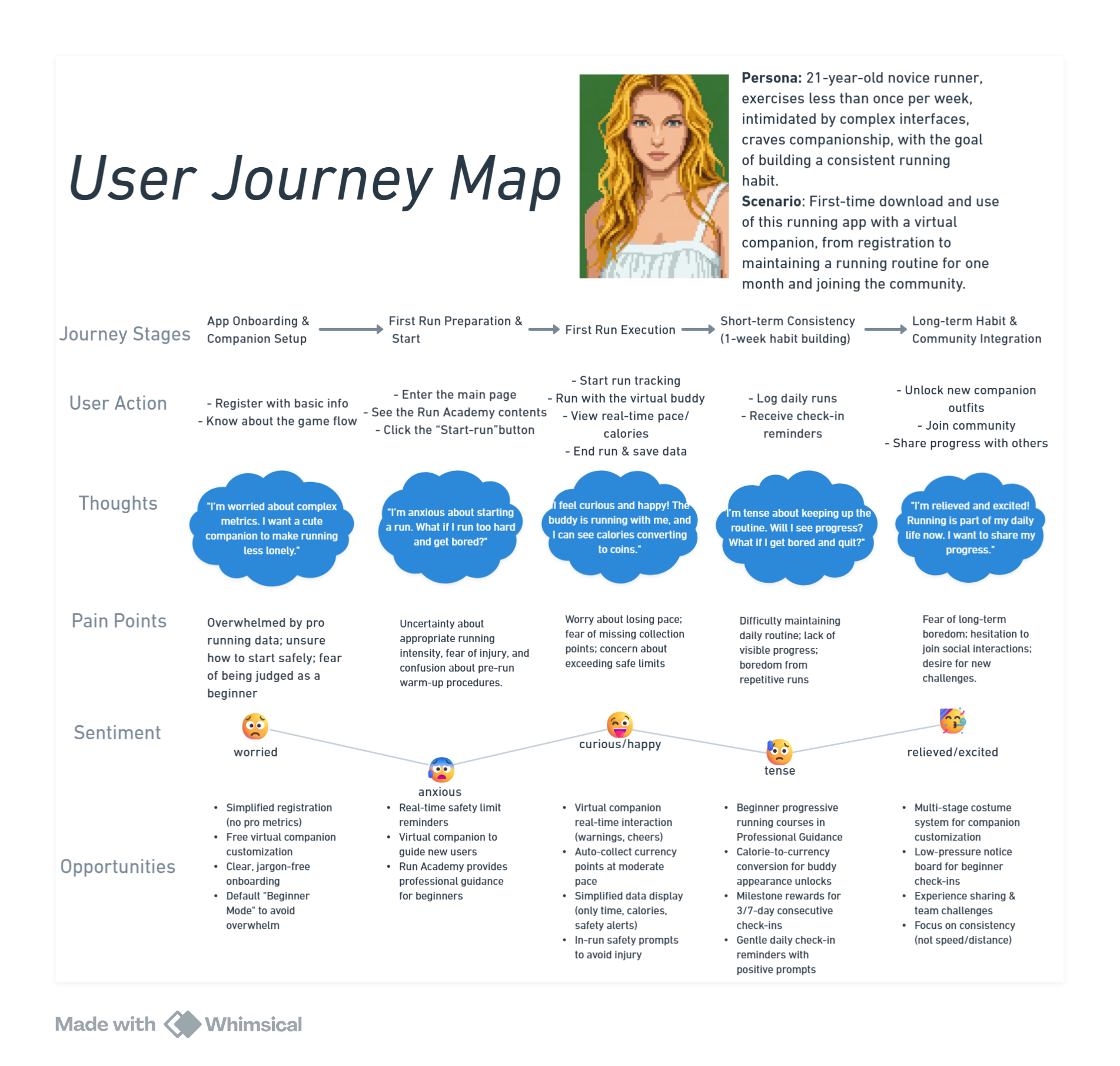
User journey map · Pain points of target users
📍 ① App Onboarding & Companion Setup → 😟 Worried (Overwhelmed by pro running data / Fear of being judged as a beginner)
📍 ② First Run Preparation & Start → 😰 Anxious (Uncertainty about safe route selection / Fear of overtraining/injury)
📍 ③ First Run Execution → 😊 Curious/Happy (Worry about losing pace / Concern about exceeding safe limits)
📍 ④ Short-term Consistency (1-week habit building) → 😰 Tense (Difficulty maintaining daily routine / Boredom from repetitive runs)
📍 ⑤ Long-term Habit & Community Integration → 🥳 Relieved/Excited (Fear of long-term boredom / Hesitation to join social interactions)
🎯 RunBuddy Intervention: 💬 Community Groups + 🎤 In-Run Cheers + 📋 Personalized Health Plans
Requirements list · Three must-haves for a “playful” system
1. Virtual Buddy Companionship — An immersive running partner. Nurture, customize, and bond with your buddy using coins earned through your efforts, turning fitness into a rewarding emotional experience.
2. In-run encouragement — Provides real-time feedback during runs, offering dynamic responses such as prompts (which can be personalized by users) and milestone recognition to support users.
3. Healthy Running Guidance — Run Academy provides web-based tutorials for beginner runners to correct improper running form. Additionally, a warning page will prompt the user if their heart rate exceeds safe thresholds during a run.
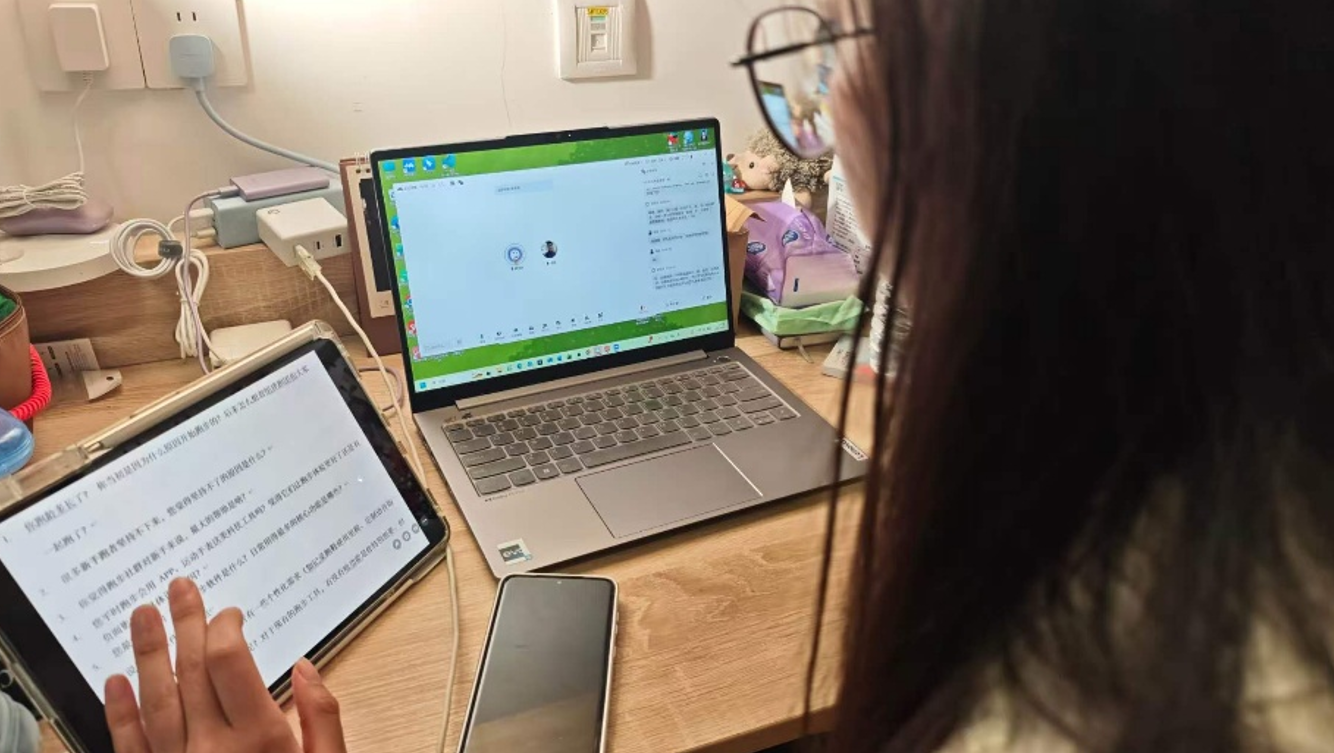
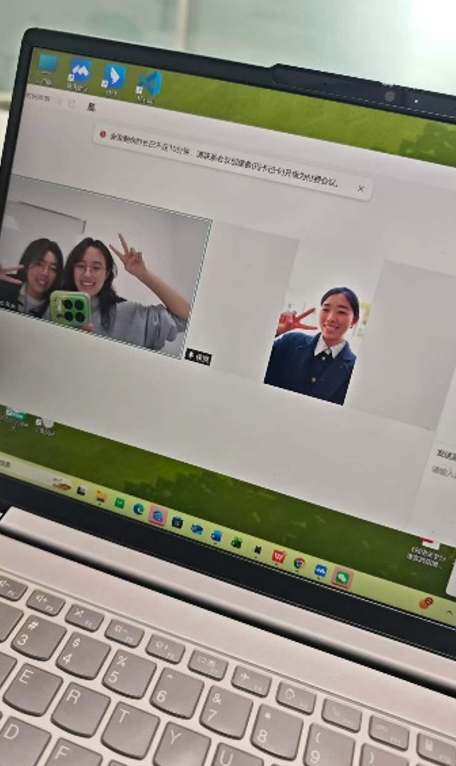
Evidence of life · 5 photos
Ideation & Alternatives
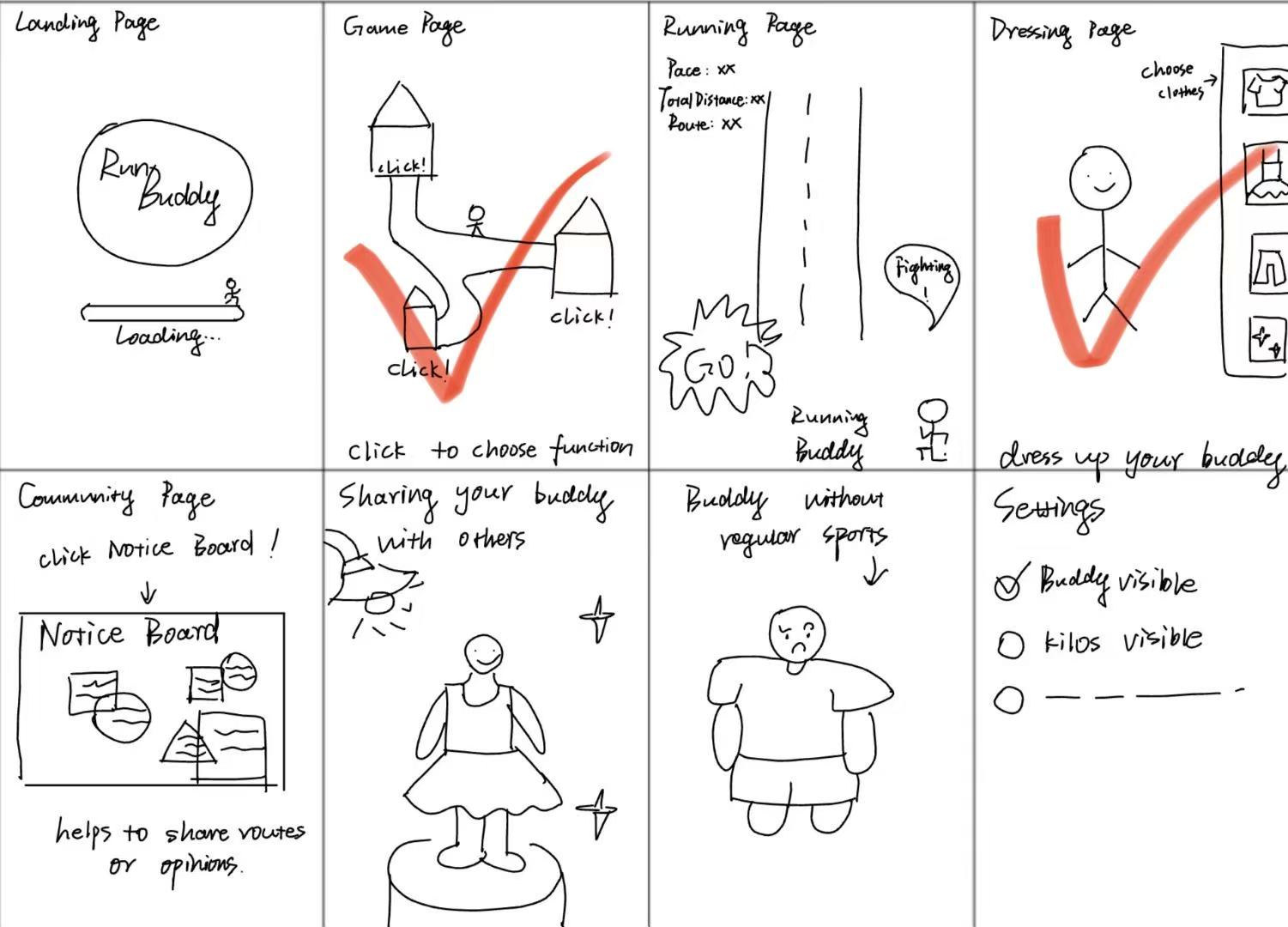
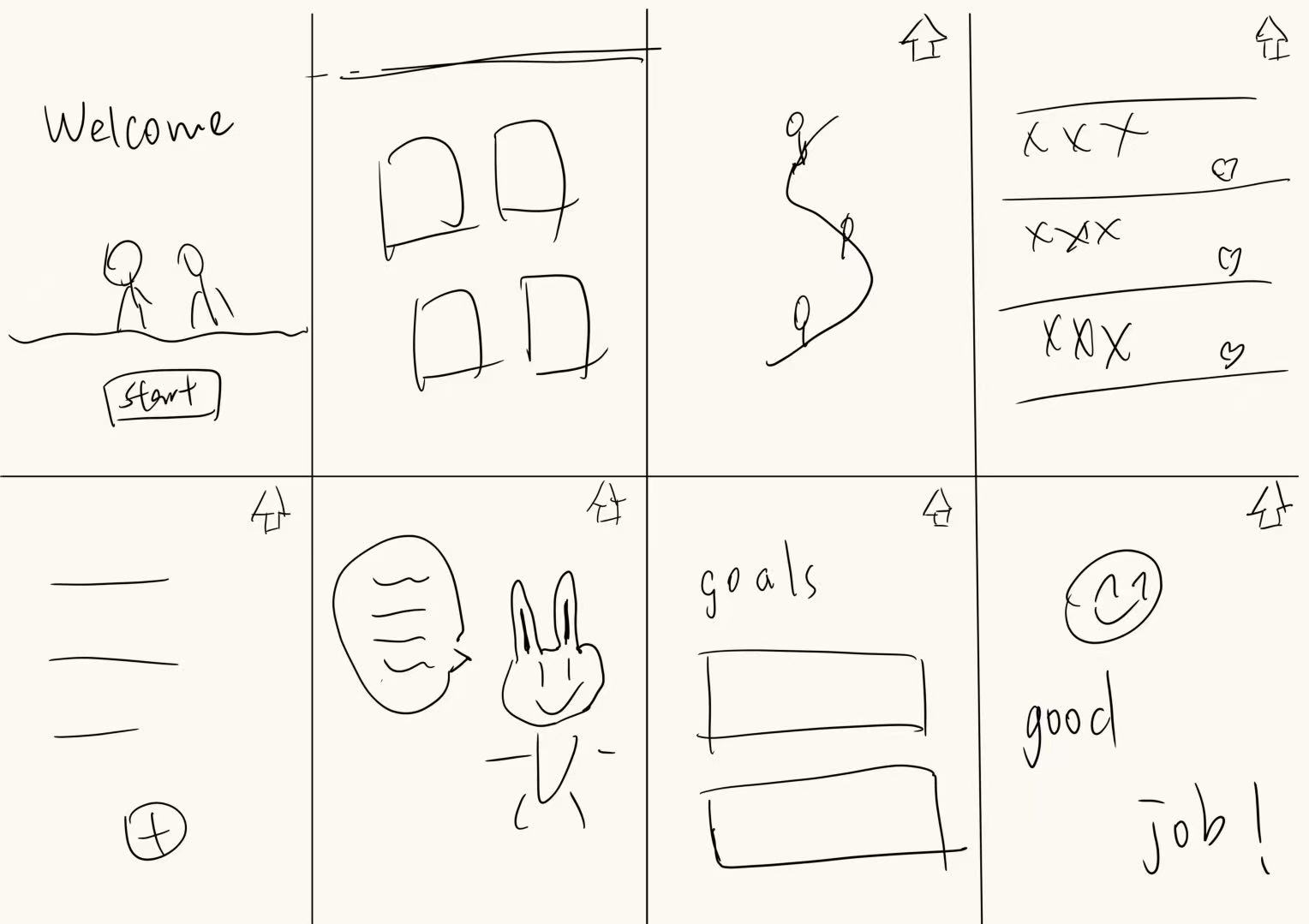
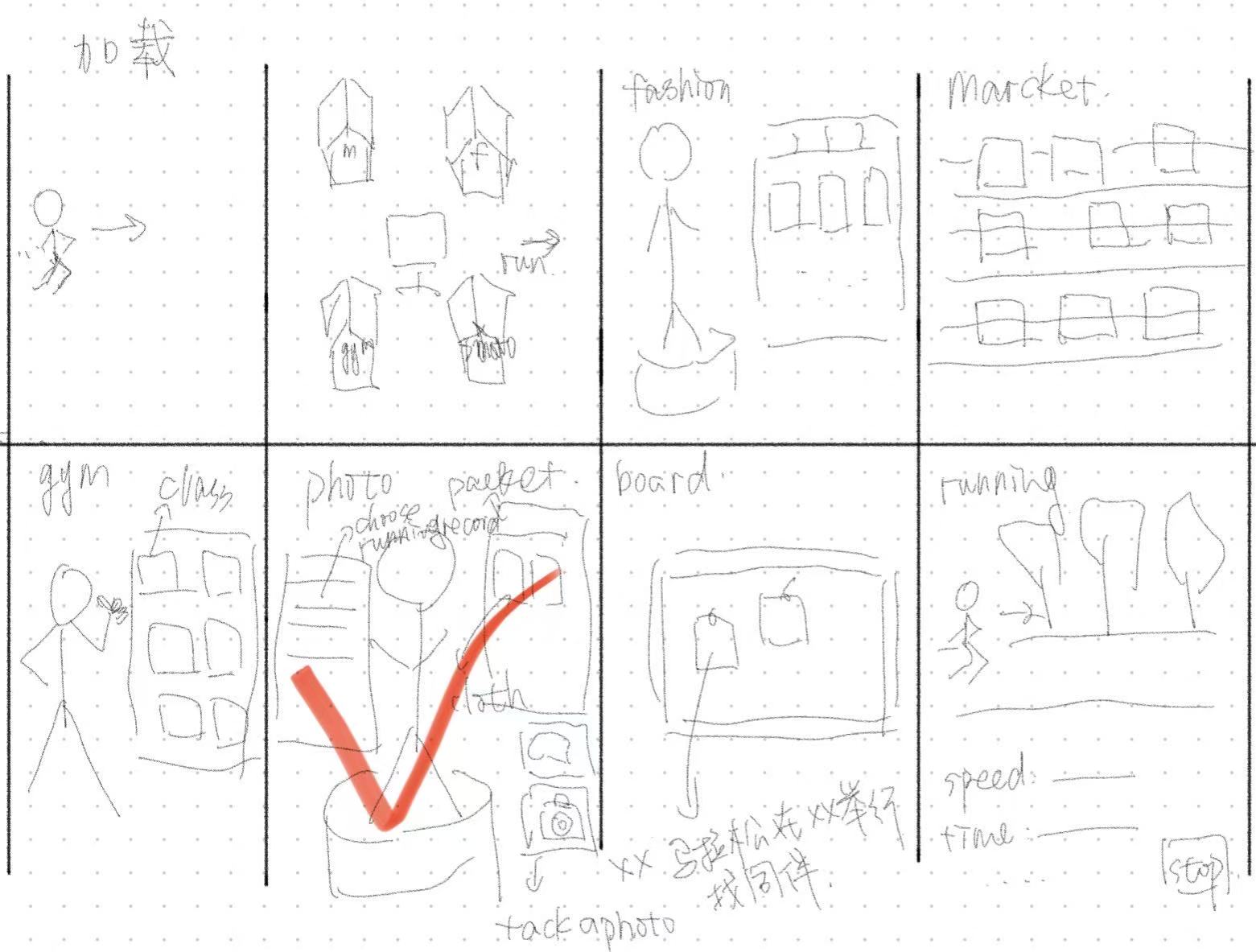
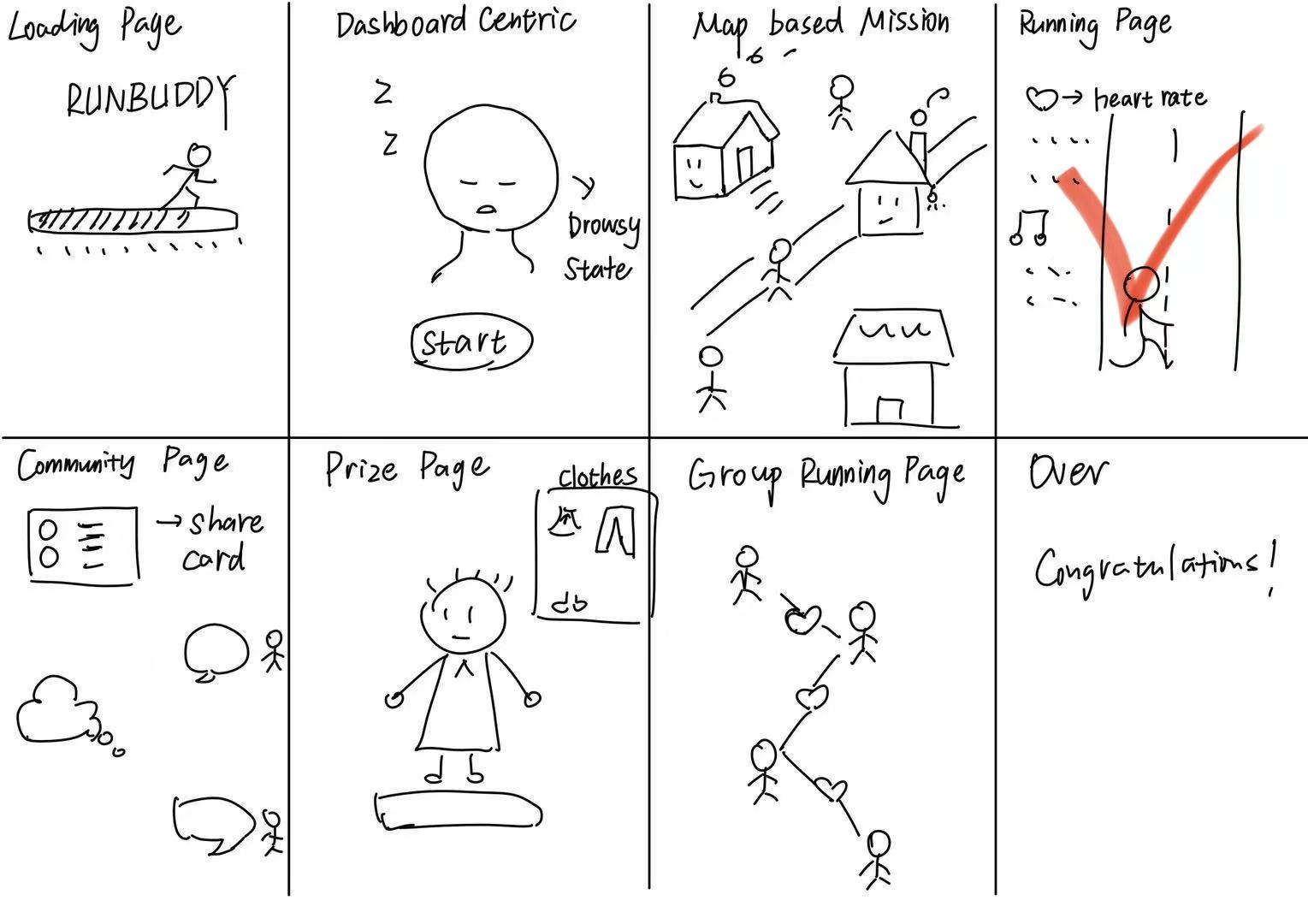
Crazy Eights · 8 rapid hand-drawn UI sketches
1
2
3
4
Design alternatives · Compare 2–3 system directions & final choice
Option A: Pure Data Competitive Emphasizes pace/rankings, similar to traditional sports apps. ❌ Disadvantages: High pressure for beginners, lack of emotional stickiness.
Option B: Hardcore Gamified RPG Complex quests, monster battles and leveling up, deviating from the essence of running. ❌ Disadvantages: High learning cost, deviation from sports safety.
✅ Option C: Companion-based Collection + Light Narrative (RunBuddy) ✔️ Virtual companion support + safe running volume exchange for costumes + unlock real routes + bulletin board social features. ✔️ Integrates "deep gamification" theory with injury prevention mechanisms to protect beginners.
Reasons for Selection: Directly addresses the lack of "deep narrative gamification" in literature, combines Sigma's campus advantages with Joyrun's route fun, fills the frustration caused by excessive competition, and makes running sustainable.
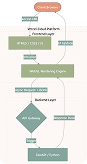
frontend:HTML/CSS/JS(Lightweight, build-tool-free, with excellent cross-platform compatibility) backend:Python (FastAPI)(Modern, high-performance, with built-in automatic documentation) database:MySQL(Relational database, well-structured schema, familiar to the development team)

.png)